
Midyear Housing Market Update


Housing markets across the nation are experiencing a transition back toward the range of pre-pandemic levels for buyer demand and home sales. This transition is not a bad thing. The pandemic years were not sustainable.
You may be wondering if now is a good time to act. As Central Texas' #1 independent brokerage, we obsess over keeping our clients informed. This is why we analyze the data, speak with experts, and curate content answering your most pressing questions. Keep reading as we break down mid-year projections and share what we are seeing in our local residential real estate market.
Housing inventory levels in the Austin-Round Rock area pushed over two months of inventory in June for the first time since 2019. Higher mortgage interest rates are easing buyer demand allowing inventory to grow. This growth creates opportunities for homeowners looking to move and more options for buyers in their home search.
According to the Austin Board of REALTORS® Central Texas Housing Market Report:
- New listings increased 19% to 6,160 compared to June 2021 and increased 17% as compared to May 2022
- Active listings rose 217% to 7,090 as compared to June 2021 and increased 69% as compared to May 2022
- Months of housing inventory more than doubled to 2.1 compared to June 2021 and increased from May 2022 which was at 1.2 months
- Pending sales declined 31% to 2,887 transactions as compared to June 2021
- Home sales declined 20% year over year to 3,441 as compared to June 2021
- The median sales price rose 13% to $537,475 over June 2021
- Homes still sold quickly and spent an average of 18 days on the market, 5 more days than June 2021, and continued to sell over the asking price at an average of 102%
“People have internalized the narrative that the 2021 market was a normal market and many buyers may have lost hope. Frankly, the 2021 market was anything but normal and this transition signals that more hope for buyers is on the horizon,” says George Ratiu, senior economist and manager of economic research at Realtor.com.
It’s easy to narrow in on the last two years as a reference point for your real estate expectations, but that zoomed-in view can be misleading. The best thing you can do is partner with an experienced local agent to help you seize an opportunity when it is presented.
Is active market inventory projected to continue increasing?
Yes. Experts at Realtor.com are projecting that active listings will continue to grow year-over-year as the inventory recovery accelerates in the second half of 2022. Americans have faced a whirlwind of changes so far this year. Inflation has made a more significant and long-standing impact on real estate markets than was anticipated six months ago. These changes have allowed inventory to build. We are seeing this hold true in our local market.
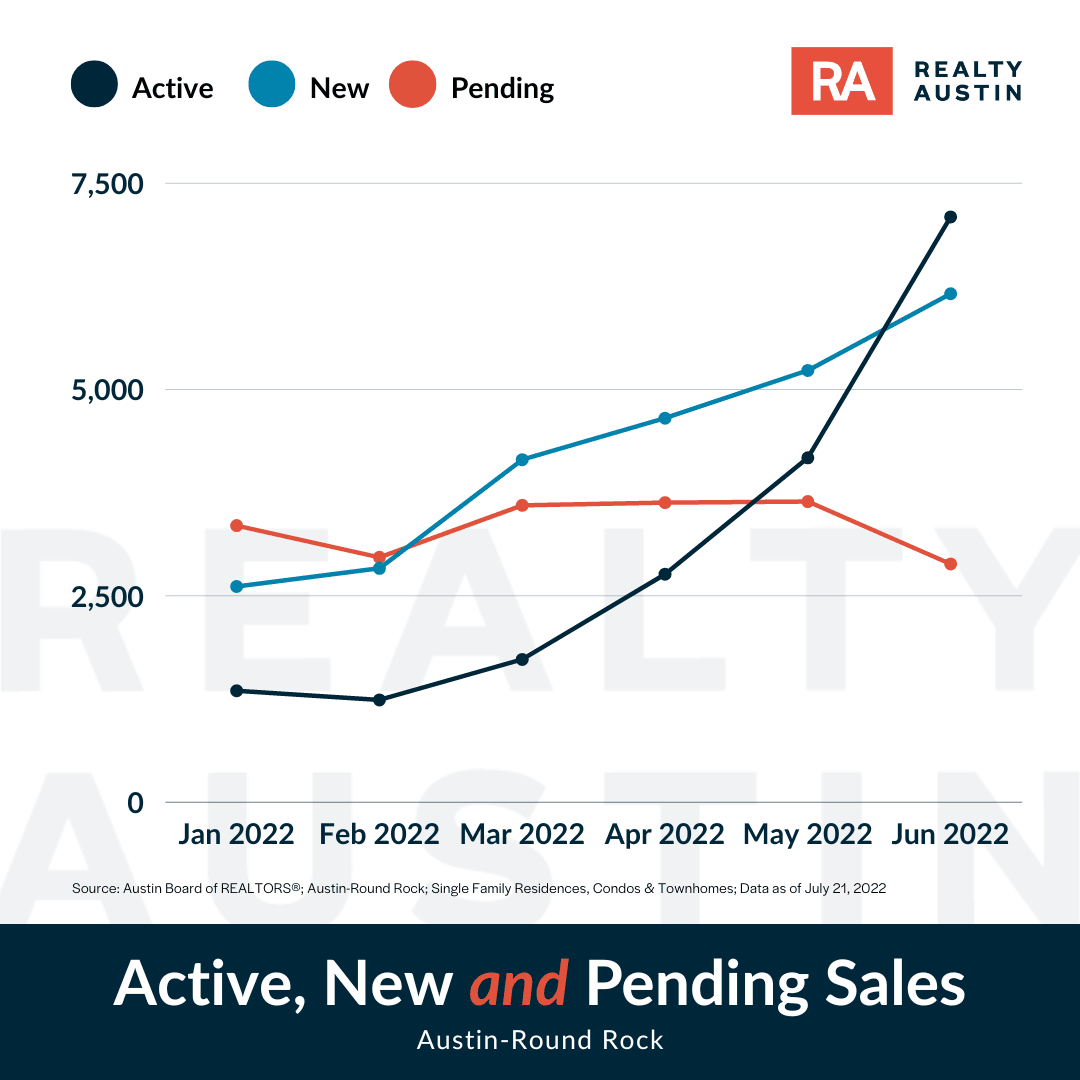
This summer the number of homes for sale continues to grow in the Austin-Round Rock Metro.
The continued increase in inventory is great news for buyers because you now have more options in your home search. In our local market, new builds are still helping increase the number of available homes.
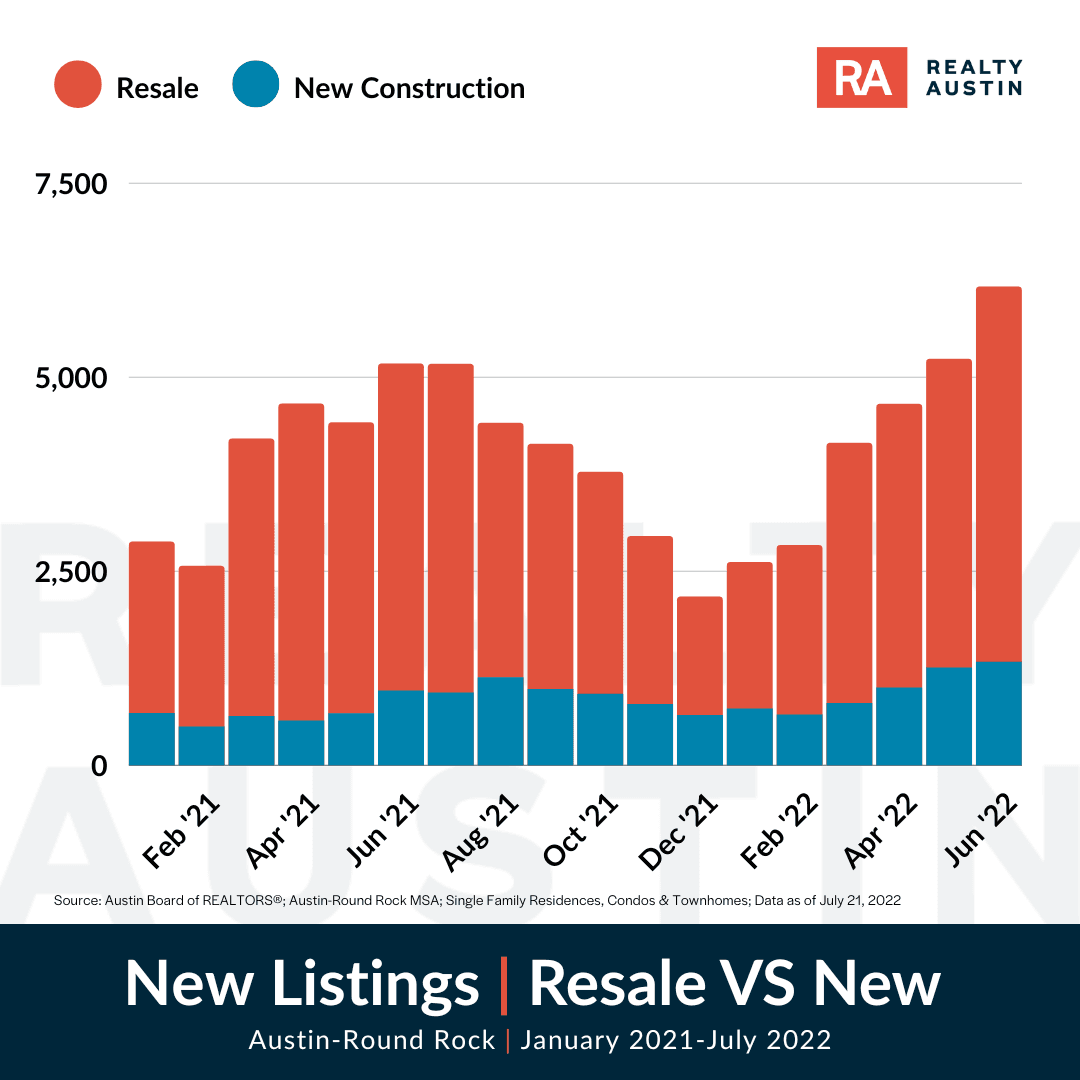
New construction is also contributing to the number of new listings hitting the market.
Higher mortgage rates impacted some homebuyers’ purchasing power in June. This led some buyers to walk away from deals.
As bidding wars decrease and buyers have more breathing room, an increasing number of buyers are keeping (rather than waiving) inspection and appraisal contingencies. As buyers get a chance in the driver’s seat, these decisions could lead to more canceled deals if mortgage rates rise further. Buyers may want to consider a mortgage rate lock to protect them from rising interest rates as they search for a home.
Are home prices going up or down?
Forbes reports that national home price growth is also beginning to decelerate.
Ben Graboske, president of Black Knight, says that home prices would have to continue slowing at the current rate for at least the next 12 months to return the housing market to a more normalized 3% to 5% national growth rate. Let’s take a look at home prices in Austin.
The median home price for June increased 13% year over year to $537,475 in the Austin-Round Rock area. The rate of appreciation trended downward for the fifth month in a row, with the median sales price in June 2.3% lower than May’s $550,000. In our local market, we are seeing deceleration, meaning the rate of appreciation is declining each month as compared to the previous year. Deceleration makes sense given the unsustainable rate of appreciation over the last two years.
“As the Austin housing market returns to a sense of normalcy, it’s important for buyers to work with an experienced agent to help them utilize their newfound bargaining power amidst increased inventory,” says Realty Austin Head of Sales Jolene Weinstein.
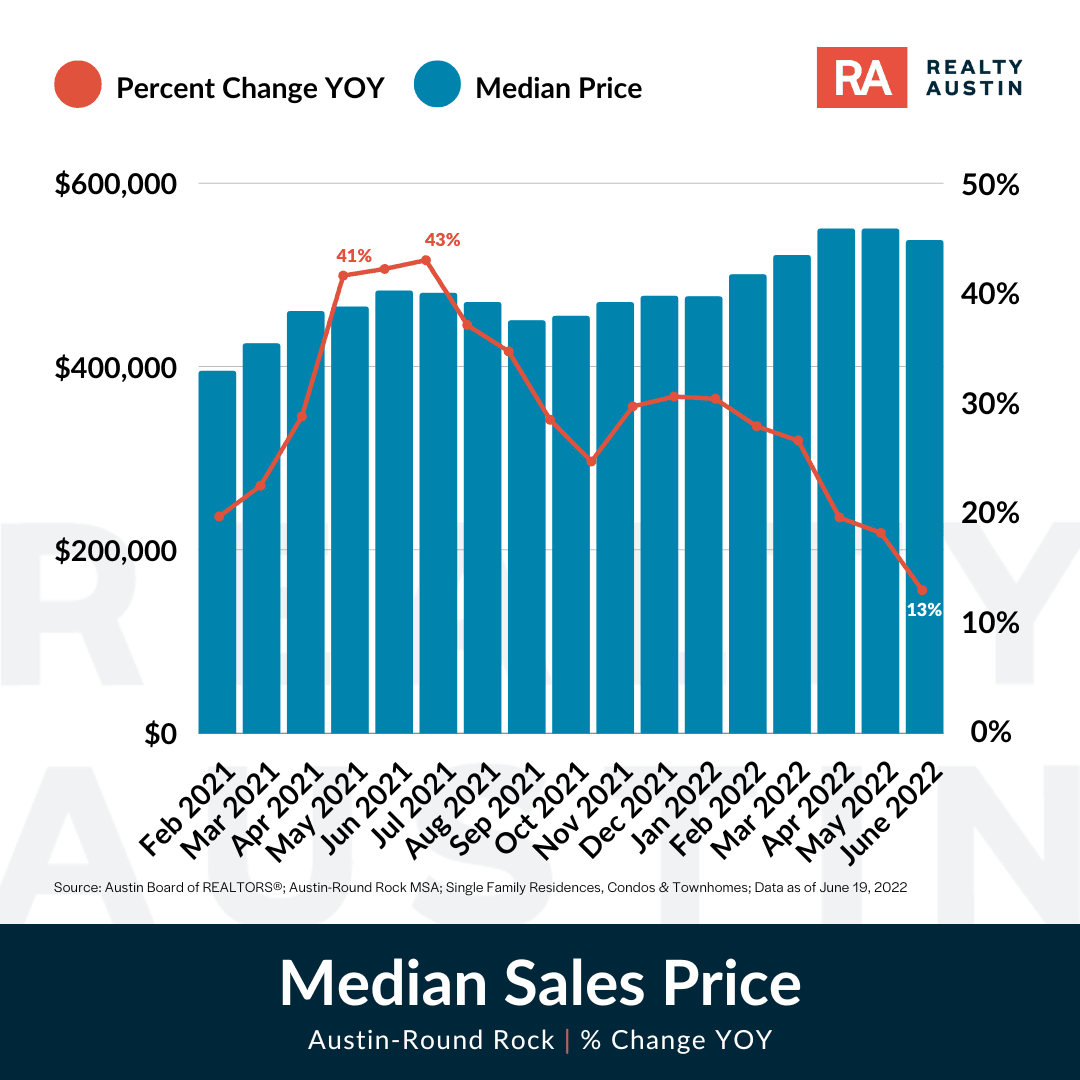
Pro Tip: If you’re looking to sell your home in Austin, know that home price appreciation equals more equity in your home. This growth in home equity helps sellers make a move up or down. According to the latest data from CoreLogic, the average homeowner gained $64,000 in home equity over the past 12 months. This equity could be some of what you need for a down payment on your next home. If you’re thinking about making a move, reach out to one of our local experts to find out how much equity you have in your home and how you can use it. Additionally, if you move soon, you’ll benefit from an increase in inventory and more homes to choose from.
Do price reductions indicate demand is weakening?
Somewhat. Pricing your home correctly is crucial when selling your home to reduce the likelihood that you’ll need to reduce the price. Additionally, price reductions are in part a response to the anomalous market of the past two years.
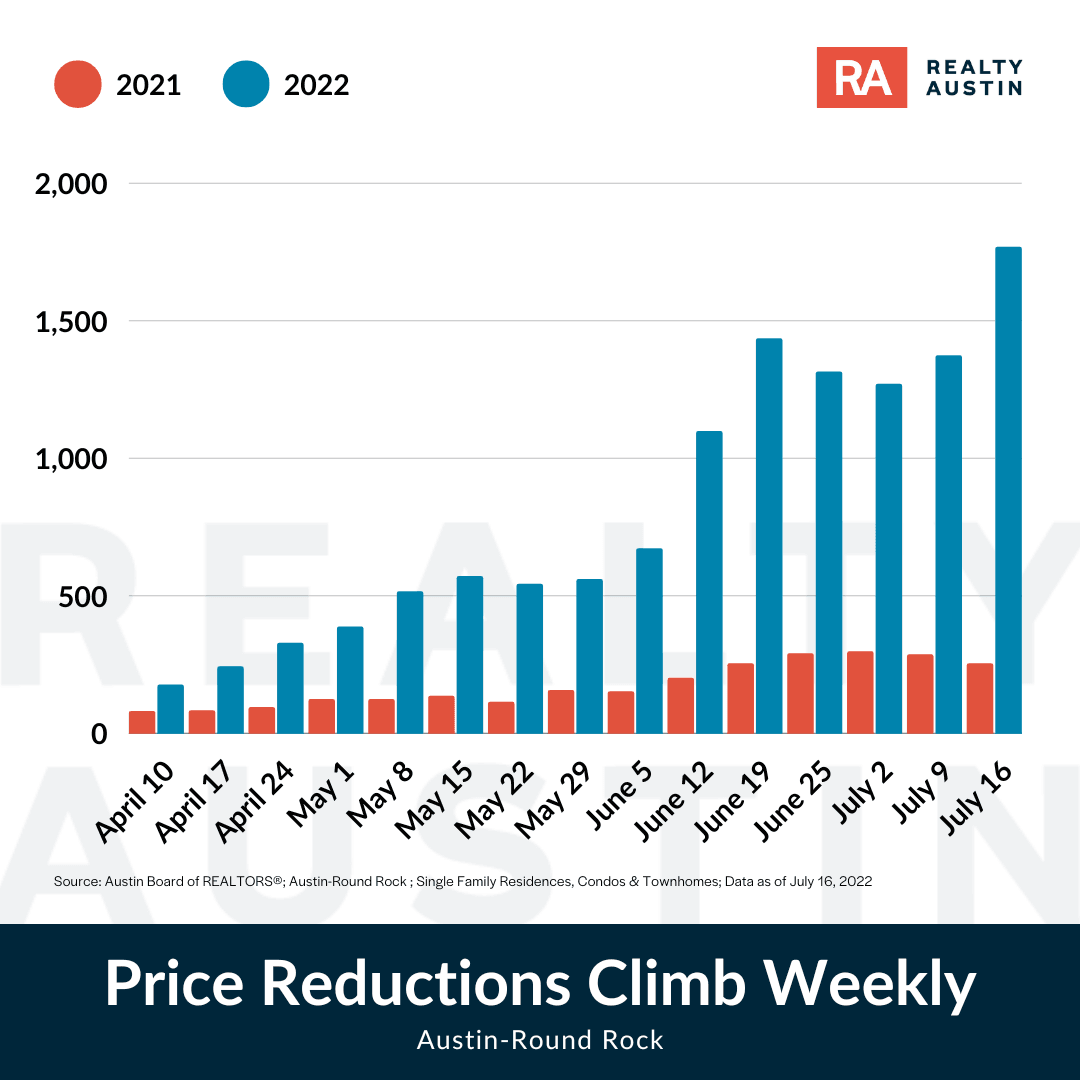
To get a sense of demand, the primary number to watch here is the percent price decrease. Between 30-35% is normal in most markets, so if it’s nearing 40% or more, that could be a sign that demand is weakening. Active listings with price reductions are increasing rapidly in our metro—the most we’ve seen since 2019, and they are rising faster than we’ve seen in many years. According to Altos Research, Austin was at 6% last summer as compared to 48% in June 2022.
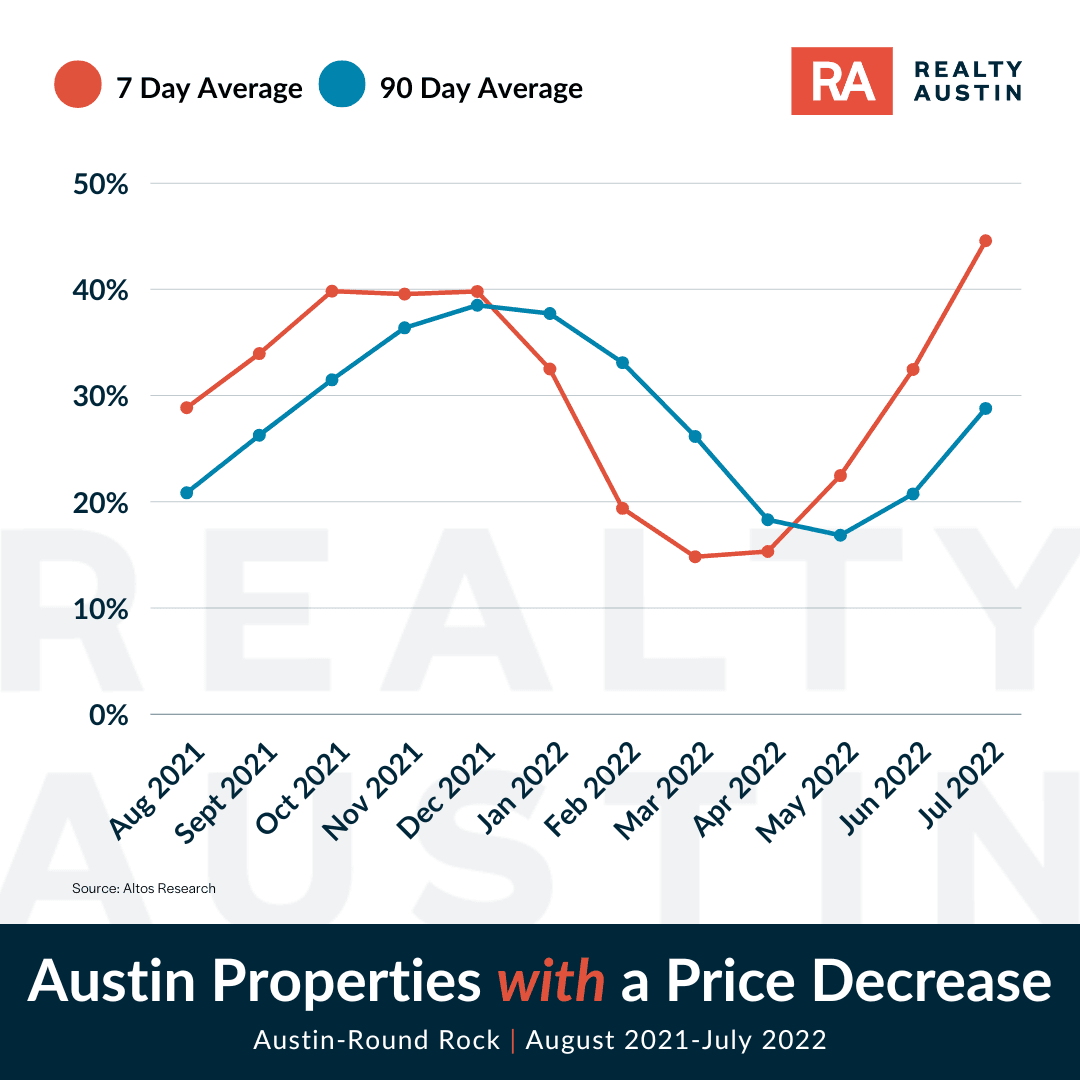
As a brokerage, we are also watching months of inventory and the number of days on the market (DOM) to inform our understanding of demand. When these metrics climb, there is a strong case for sellers to reduce their list price. In June, the Austin-Round Rock area’s months of inventory rose to 2.1, and the days on market rose to 18. Sellers are still seeing over asking price for their homes, but that number is decreasing each month. In June 2022, the original list price to sale price was 102.3%.
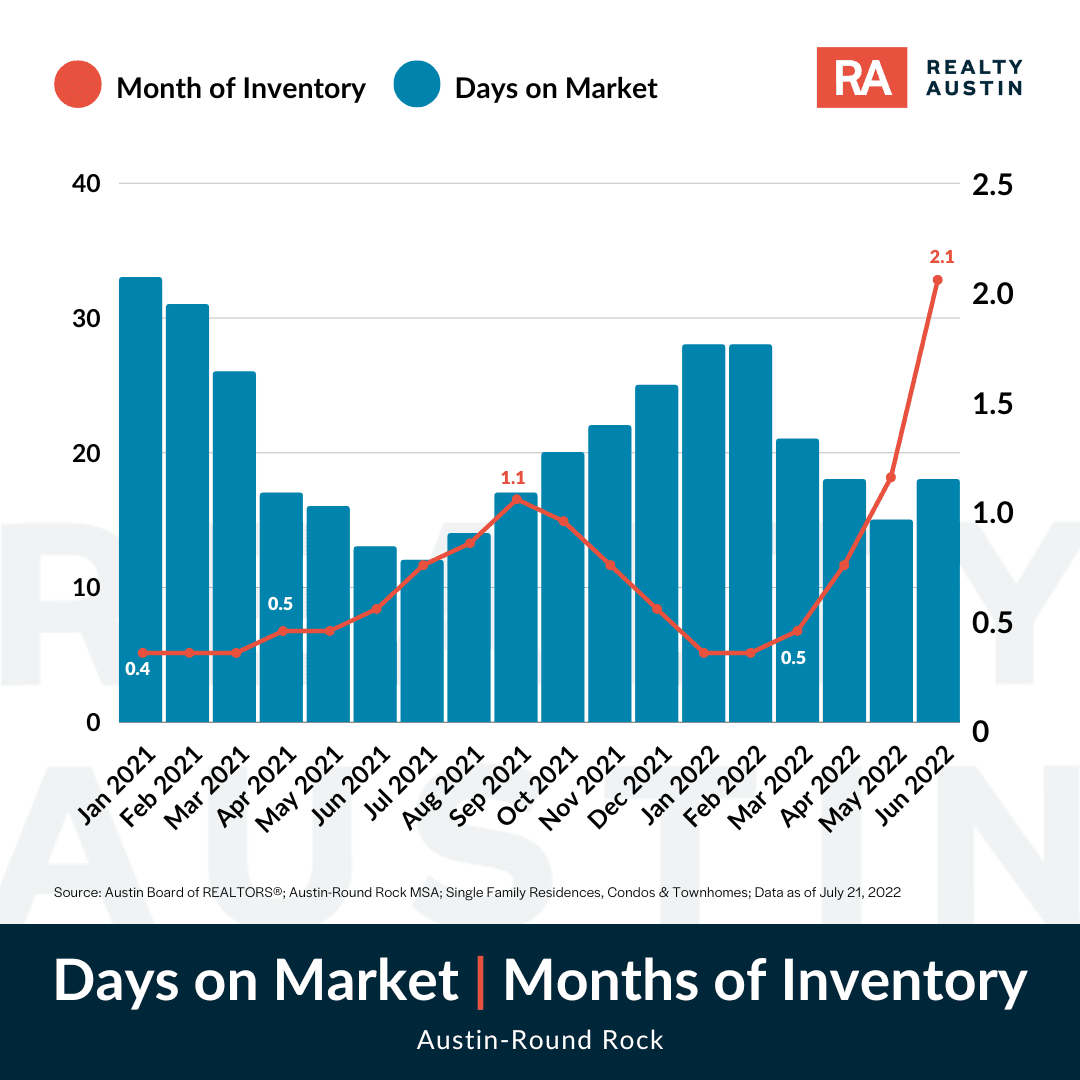
Pro Tip: Know how fast you’ll need to move. Keep an eye on DOM (days on market) to understand how fast you'll need to move once you’re ready to make an offer. If properties are moving quickly, you’ll need to move fast. If DOM is flat or increasing, you may have more time. Of course, when working with an agent, they can guide you through this.
Is Austin still a seller’s market?
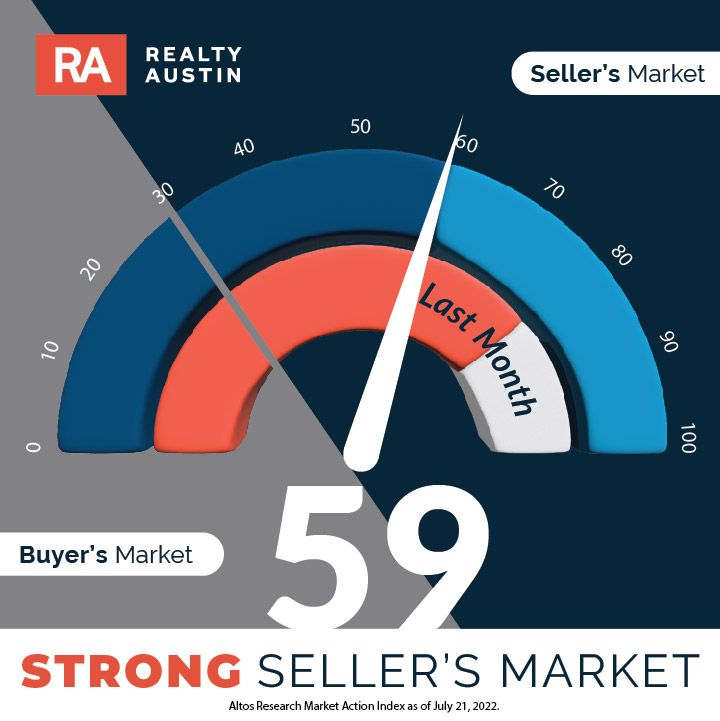
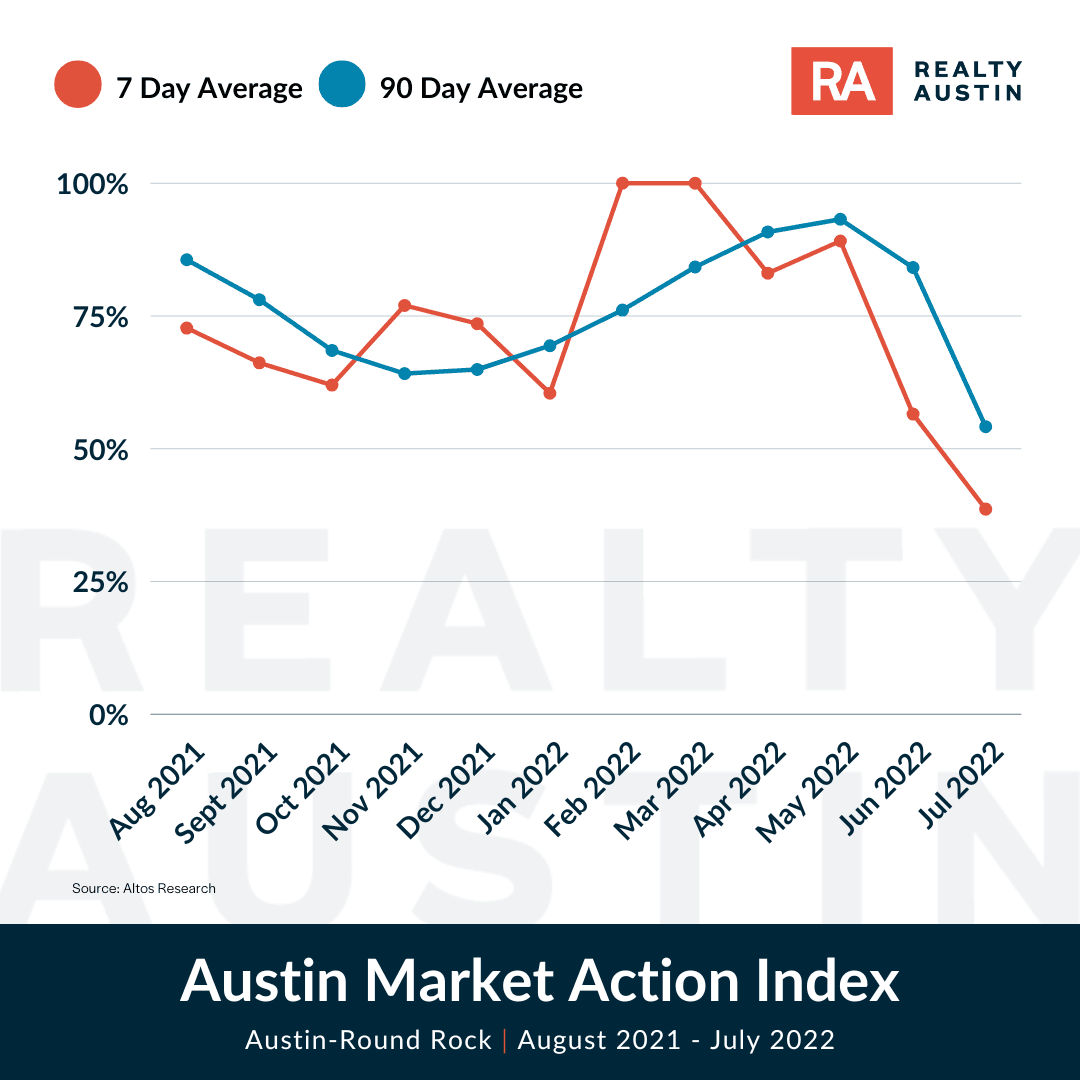
Yes, but the market is shifting. The number to watch here is the Market Action Index as published by Altos Research. In our version, the blue portion is the current month, and the red portion is the previous month. It has been moving towards a buyer’s market more each month. This shows that the market is cooling. Sellers will want to work with a local expert to price their home right to get ahead of the curve.
How does cooling buyer demand impact the rental market in Austin?
The average rent in Austin continues to increase. The average price for a Single Family Residence (SFR) in the Austin-Round Rock Metro increased to $2,679/month in June 2022 vs. $2,413 in 2021 (an increase of 11%). We anticipate this will continue to increase as more buyers move to rent if they put their purchasing plans on pause.
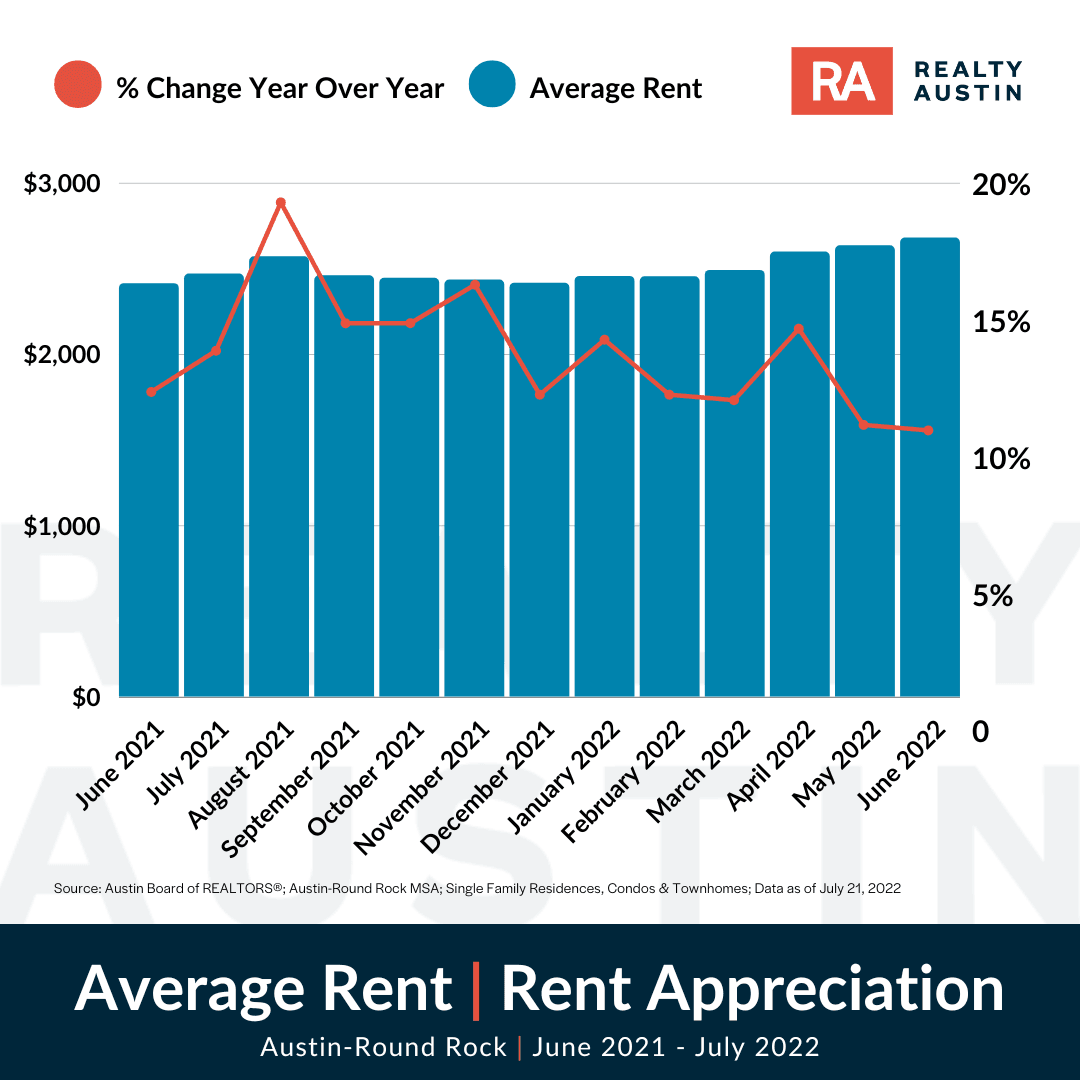
The decision to rent or buy in Austin’s housing market is influenced further by significantly rising rents, climbing home prices, current interest rates, inflation, and more.
Where are mortgage rates headed?
Rates have climbed over 2% this year as a result of the Federal Reserve’s response to rising inflation. The U.S. Labor Department reported that inflation reached 9.1% in June, its highest rate in nearly 41 years. The Wall Street Journal predicts this inflation report will defend the Fed’s 0.75 anticipated point rate rise in late July. Bloomberg also reported two of the Fed’s policymakers agree with raising interest rates another 75 basis points in July to curb inflation.
In a recent MarketWatch article, Greg McBride, chief financial analyst at Bankrate, says what happens next depends a lot on inflation.“Until inflation peaks, mortgage rates won’t either.”
The Wall Street Journal reported that Fed Chairman Jerome Powell also stated the central bank wants to see clear evidence that price pressures are diminishing before slowing or suspending rate increases. Buyers could stand to save, and gain peace of mind, by considering a mortgage rate lock ahead of further increases.
Pro Tip: If you can afford the payment, it’s a good idea to get into the market now rather than waiting for interest rates to lower. The longer you wait for interest rates to lower, the more equity you're losing as Austin homes tend to appreciate year over year.
What does Austin’s job market tell us?
The job market in Austin thrives in part because of its diverse and resilient economy, and also because of the talent pipeline as large companies continue to relocate and expand in Central Texas.
“There may be fear that the economy is slowing, but the labor market is a point of strength,” said Daniel Zhao, senior economist at Glassdoor in an article by the Wall Street Journal. “While this job market does require looking with a careful eye, it remains healthy and does not look like a labor market on the edge of recession.”
CNBC reported payrolls increased $372,000 in June as the job market continues to defy recession fears. “Job growth was well above the consensus expectation, the unemployment rate held just above a decades-long low, and wage growth was solid,” wrote Gus Faucher, chief economist at PNC Financial Services Group.
According to the Austin Business Journal, Austin continues to see corporate relocations and expansions. They reported that through April 2022, there were 28 announcements of relocations and 47 expansions. These companies pledged to create 7,669 jobs, according to data tracked by Opportunity Austin, the economic development section of the Greater Austin Chamber of Commerce. If that pace continues, the Austin metro area would end the year with 18,406 jobs announced.
According to the Texas Workforce Commission, The Austin unemployment rate is at 2.7%, which is below the historically low national average of 3.6%. A robust economy and low unemployment are attractors for people looking to move, so these numbers are a vote of confidence for Austin’s market.
No matter where you are in the home buying or selling journey, the best way to make informed decisions is to work with an experienced local agent who can explain current market data. As Central Texas’ #1 independent real estate brokerage, we are constantly studying market trends to help our clients make informed decisions, build their wealth, and prosper in the future.
Enjoy this blog post? Click here to subscribe for updates
Leave A Comment