
Why People Are Moving to and from Texas: Insights for Austin Buyers and Sellers


Staying informed about the Austin housing market is crucial whether you're looking to buy or sell. With fluctuating mortgage rates, changing inventory levels, and shifting buyer demand, making informed decisions is essential in this dynamic environment. In this blog, we'll dive into the latest trends, analyze key indicators, and discuss what these changes mean for you.
The recently released 2023 Texas Migration Trends report, based on U.S. Census 1-Year ACS estimates from October 17, 2024, provides key insights into population shifts that affect the real estate market. While these figures have significant margins of error and may be subject to revision, they offer valuable context for anyone navigating the housing market in Austin. Here’s what you need to know and why it matters.
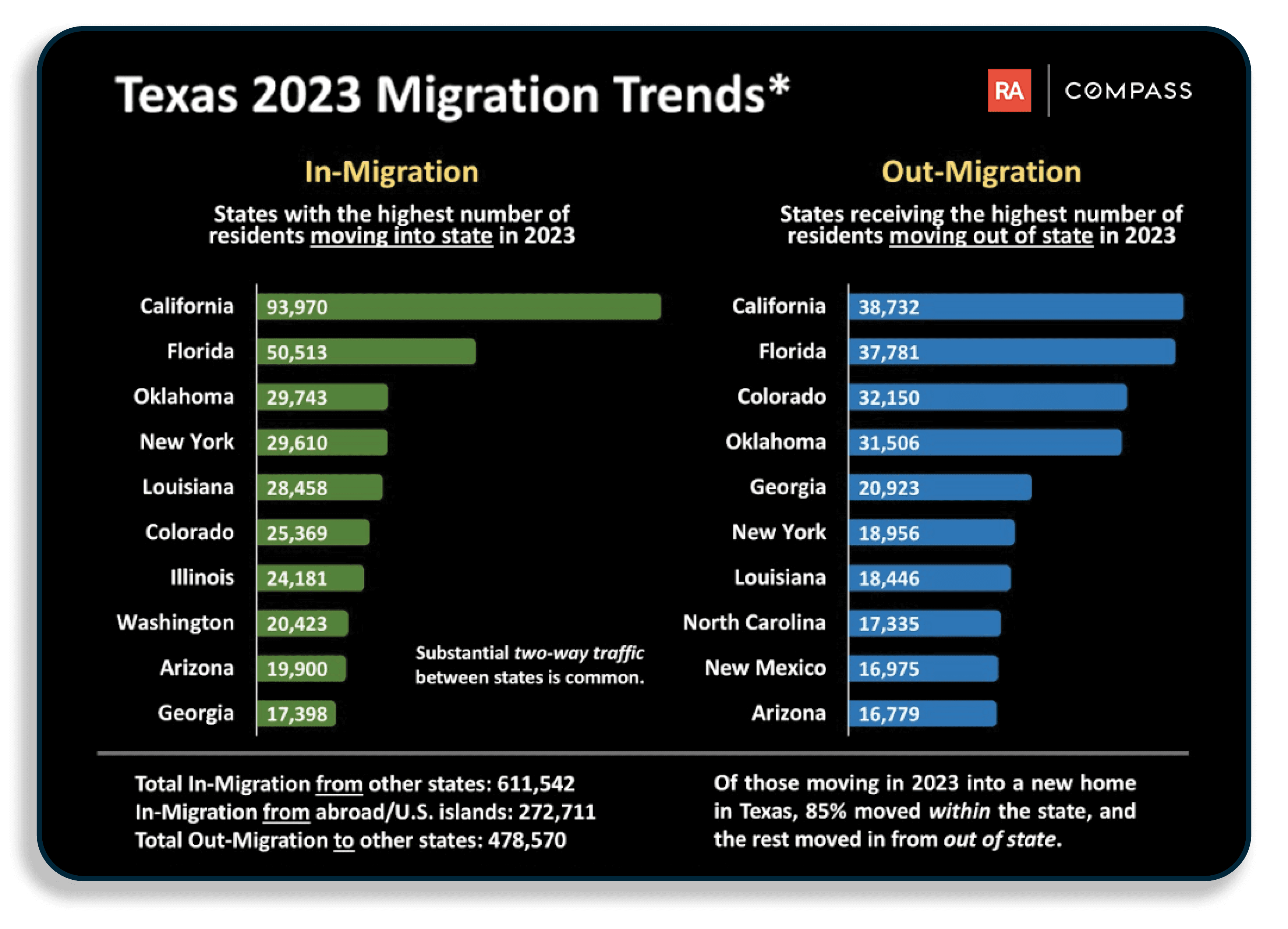
Texas 2023 Migration Trends report per U.S. Census 1-Year ACS estimates released October 17, 2024. Published with significant margins of error https://www.census.gov/topics/population/migration/guidance/state-to-state-migration-flows.html. State population is also affected by births and deaths and residents moving abroad. Data from sources deemed reliable may contain errors and are subject to revision. All numbers are approximate.
Texas: A Hub for In-Migration
In 2023, Texas saw substantial in-migration, with 611,542 people moving into the state from other U.S. states and an additional 272,711 arriving from abroad or U.S. territories. The top contributing states were:
- California – 93,970 people
- Florida – 50,513 people
- Oklahoma – 29,743 people
- New York – 29,610 people
- Louisiana – 28,458 people
- Colorado – 25,369 people
- Illinois – 24,181 people
- Washington – 20,423 people
- Arizona – 19,900 people
- Georgia – 17,398 people
Interestingly, 85% of people who moved to a new home in Texas in 2023 were relocating from within the state.
Out-Migration: Where Are Texans Moving?
While Texas has seen significant in-migration, it also experienced substantial out-migration, with 478,570 residents moving to other states. The top destinations for those leaving Texas were:
- California – 38,732 people
- Florida – 37,781 people
- Colorado – 32,150 people
- Oklahoma – 31,506 people
- Georgia – 20,923 people
- New York – 18,956 people
- Louisiana – 18,446 people
- North Carolina – 17,335 people
- New Mexico – 16,975 people
- Arizona – 16,779 people
Why Do These Trends Matter?
Understanding migration patterns is essential for potential home buyers, sellers, and investors in Austin. Here’s why:
- Demand and Housing Prices: High in-migration can drive demand for housing, which may lead to increased home prices and competition. Knowing where buyers are coming from helps sellers and investors gauge what types of properties might be most attractive to newcomers.
- Job Market and Economic Growth: People move for better job opportunities and economic prospects. States like California, Florida, and Colorado are prime examples of significant two-way traffic, suggesting robust connections and economic ties. For Austin, this means continued growth as a tech and business hub, attracting professionals and investors alike.
- Cost of Living and Lifestyle Preferences: Many move to Texas because of its lower cost of living and lack of state income tax, making cities like Austin attractive. However, outflows to states like Florida and Colorado highlight that some residents seek different climates, tax benefits, or lifestyle changes.
- Local Market Insights: The steady influx of residents from high-cost states like California or New York may continue influencing local property values and market competition. For buyers, understanding where their competition is coming from can be valuable for strategic planning.
What Drives Two-Way Migration?
Two-way migration between states is common due to various personal and economic factors:
- Job Opportunities: People often move for new career prospects or industry-specific roles.
- Cost of Living: States with lower living costs attract those looking for affordability, while others move to higher-cost states for better salaries or amenities.
- Family and Lifestyle: Proximity to family, warmer climates, or seasonal changes influence relocation.
- Education and Retirement: Students and retirees drive migration based on educational opportunities and favorable retirement conditions.
- Housing Market Dynamics: Affordability and housing market trends play a huge role in influencing where people choose to live.
- Tax Policies: States like Texas with no income tax draw new residents, though outflows also occur for lifestyle or job opportunities elsewhere.
Navigating Austin’s Market
These migration trends highlight the importance of staying informed and strategic for potential buyers, sellers, and investors. Whether you’re considering purchasing a home, listing your property, or investing, understanding who is moving to Austin and why can provide a competitive edge.
Your Moves Inspire
At Realty Austin Compass, your moves inspire us to guide you through your real estate journey. Our agents help you navigate market trends, decode pricing dynamics, review contracts, and leverage negotiation skills to secure the best outcome for you. Connect with one of our local agents today to confidently navigate your next move.
For the latest market updates, follow us on social media @realtyaustincompass. Subscribe to our market newsletter by clicking "sign up" in the top right corner of our website.
Enjoy this blog post? Click here to subscribe for updates
Leave A Comment