
Are We at the Top of the Housing Market?


Historically low interest rates drove housing markets across the nation into hyperdrive over the last year. As the Federal Reserve raises rates to fight inflation, we are seeing signs of a softening market.
With a variety of factors causing consumer uncertainty like rising interest rates and inflation, it might feel like now is the time to pause. Instead, keep reading as we break down local emerging trends and insights and explain why experts believe now may be the time to act.
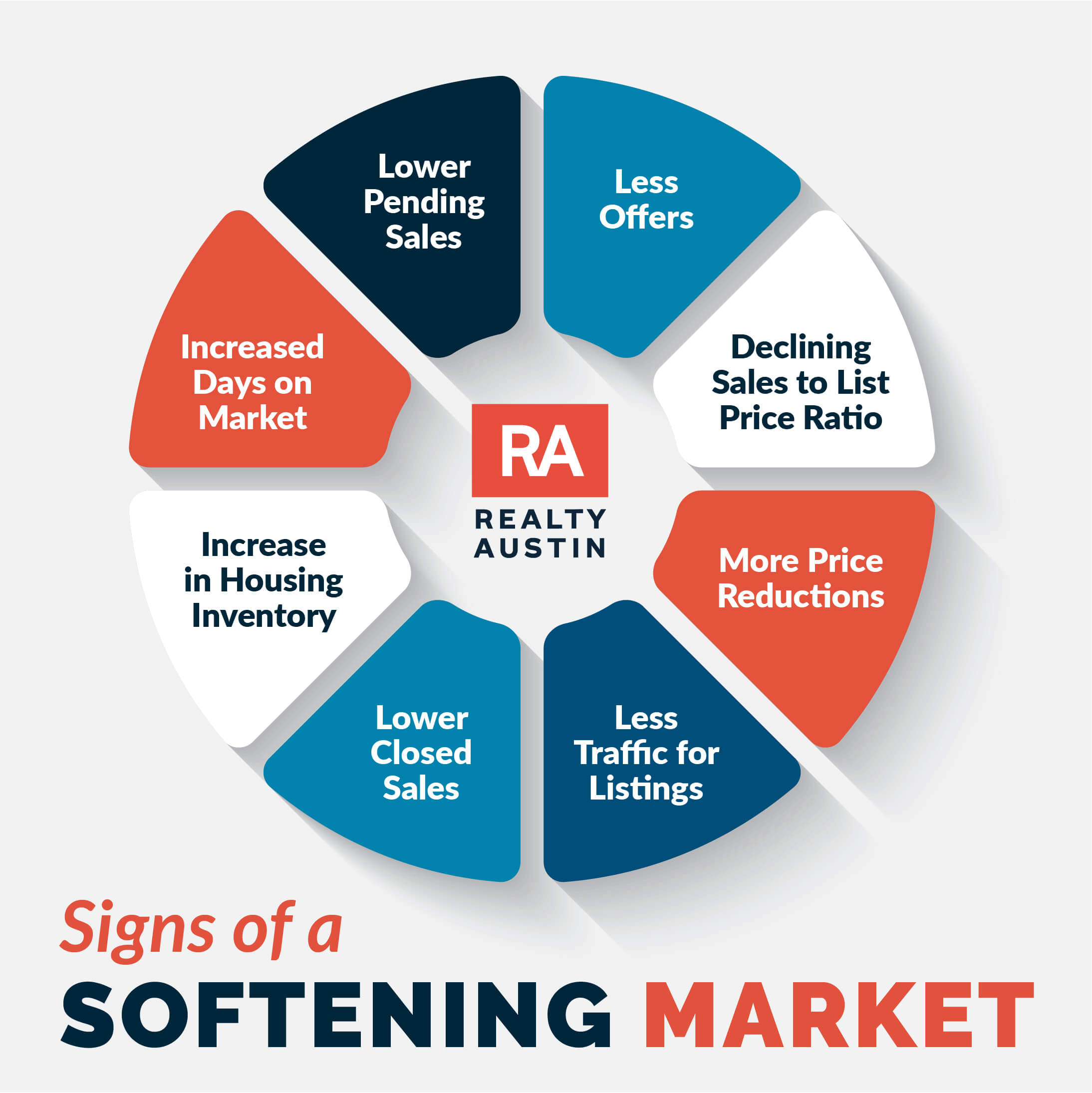
The market shift is showing up first in inventory. As inventory increases, house-price growth will slow. Talk to your agent about the dynamics of the market and learn how to be in tune with the signs of a softening market.
Sellers have a golden opportunity
As a homeowner considering selling, you may be worried that you missed the mark and won’t get over the asking price on your home or receive multiple offers. You may be wondering if this is the top of the market and whether sold prices are going to start going down. We’re still seeing homes sell for over the original listing price, but when we look year-over-year by month, this number is trending down.
What We're Seeing from April to Mid-May in the Austin-Round Rock Metropolitan Statistical Area (MSA)
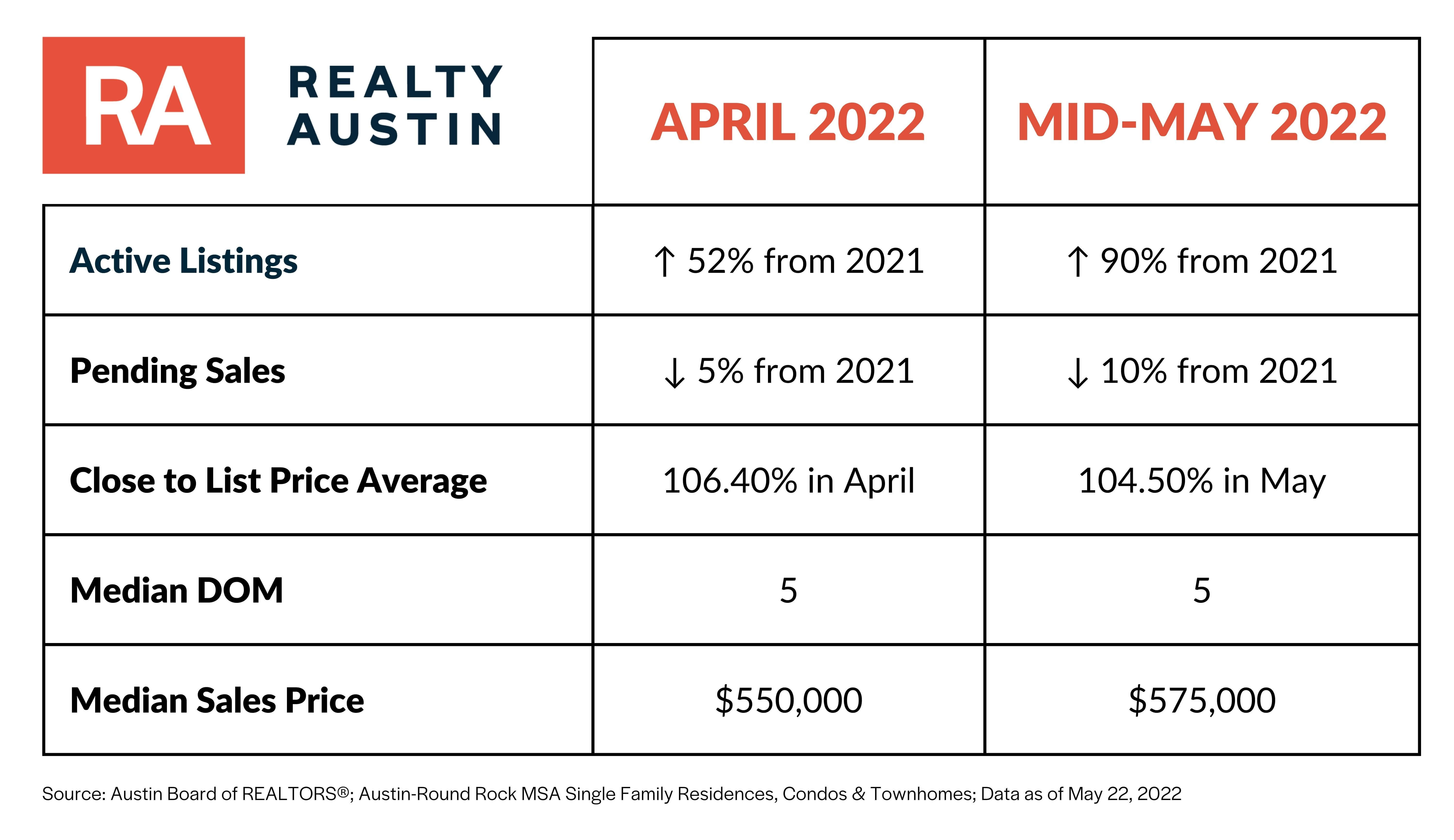
For a full comparison of April 2021 to April 2022, you can review ABOR’s data
on single-family residences, condos, and townhomes.
If you want to leverage the equity you have built up in your home as a result of the rapid appreciation in recent years to upsize or downsize, now is a good time to transition with inventory perking up.
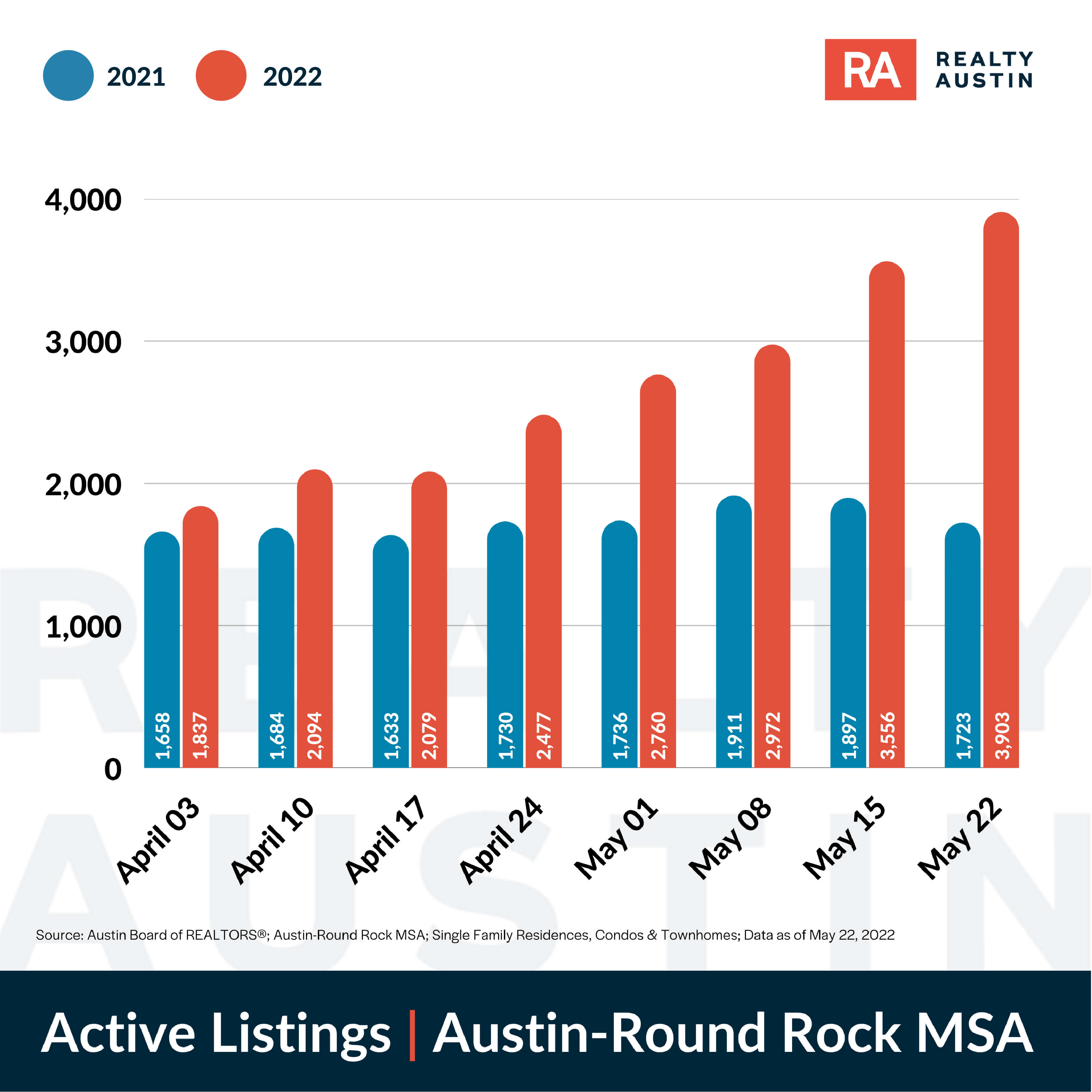
A recent Atlantic article reported that the housing market is headed for a slowdown as the tone shifts. While that is the analysis on a national scale, we are seeing that ring true in our local Austin housing market too. The months of inventory have doubled, and as the rates rise the market will likely continue to cool.
 |
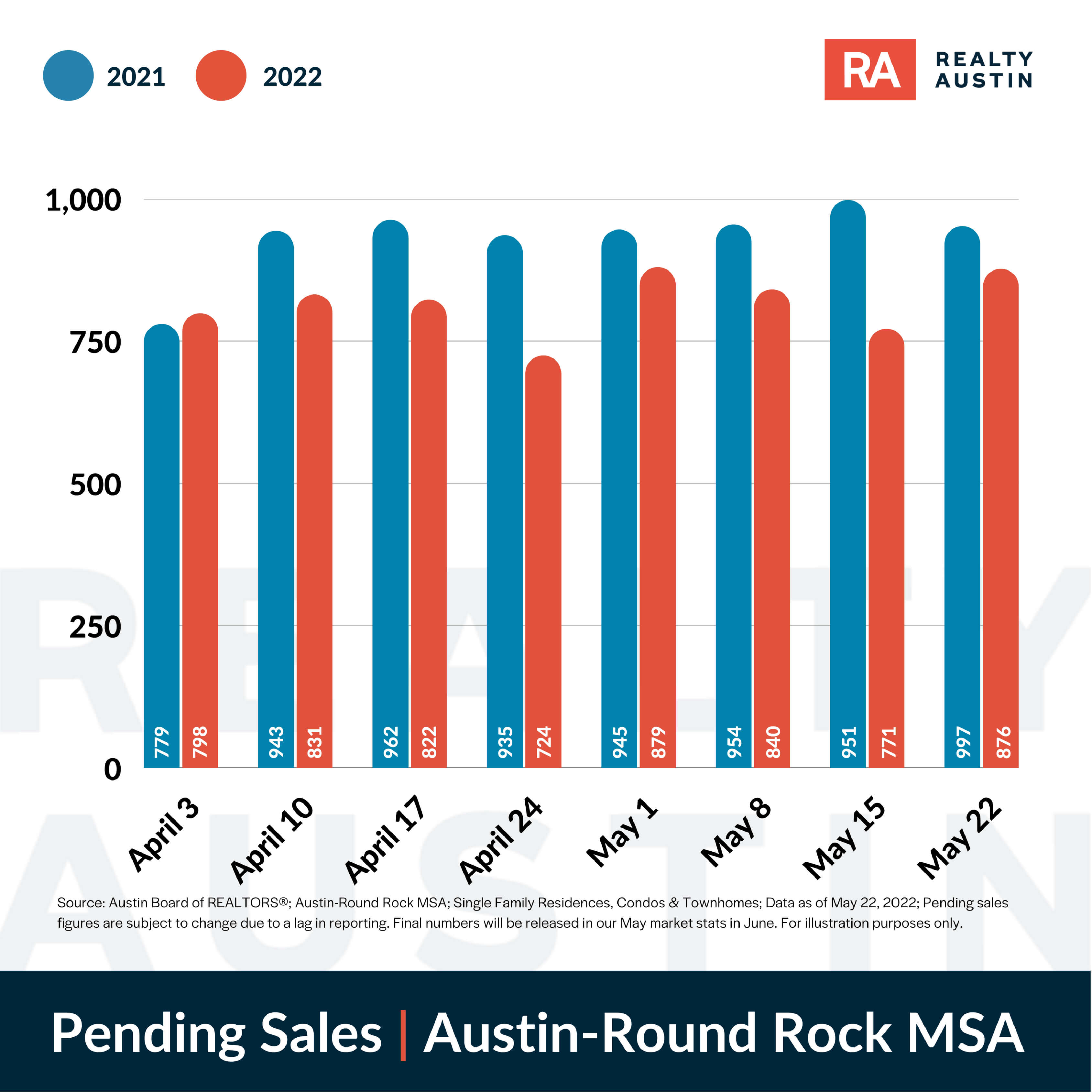 |
Active listings are up as a result of both an increase in new listings and a decline in pending listings. These trends represent a leading indicator of a shift in the market.
If you have a home to sell and you want to move, it’s a good time to do so because we are still seeing homes sell quickly and for over-asking prices.
How does an increase in inventory impact sellers and buyers?
With more inventory available, buyers have more options. As we move forward in the coming months and buyers have more choices, sellers are likely to be more flexible than they have previously been in the last two years. While the local market is cooling, homes are still selling quickly and for over the original listing prices at this time.
As more homes become available buyers' buying power will diminish as a result of rate and price increases, and sellers will need to price their homes carefully. An experienced real estate agent can help you navigate pricing and negotiations with regard to the current local market conditions.
We’re seeing more inventory
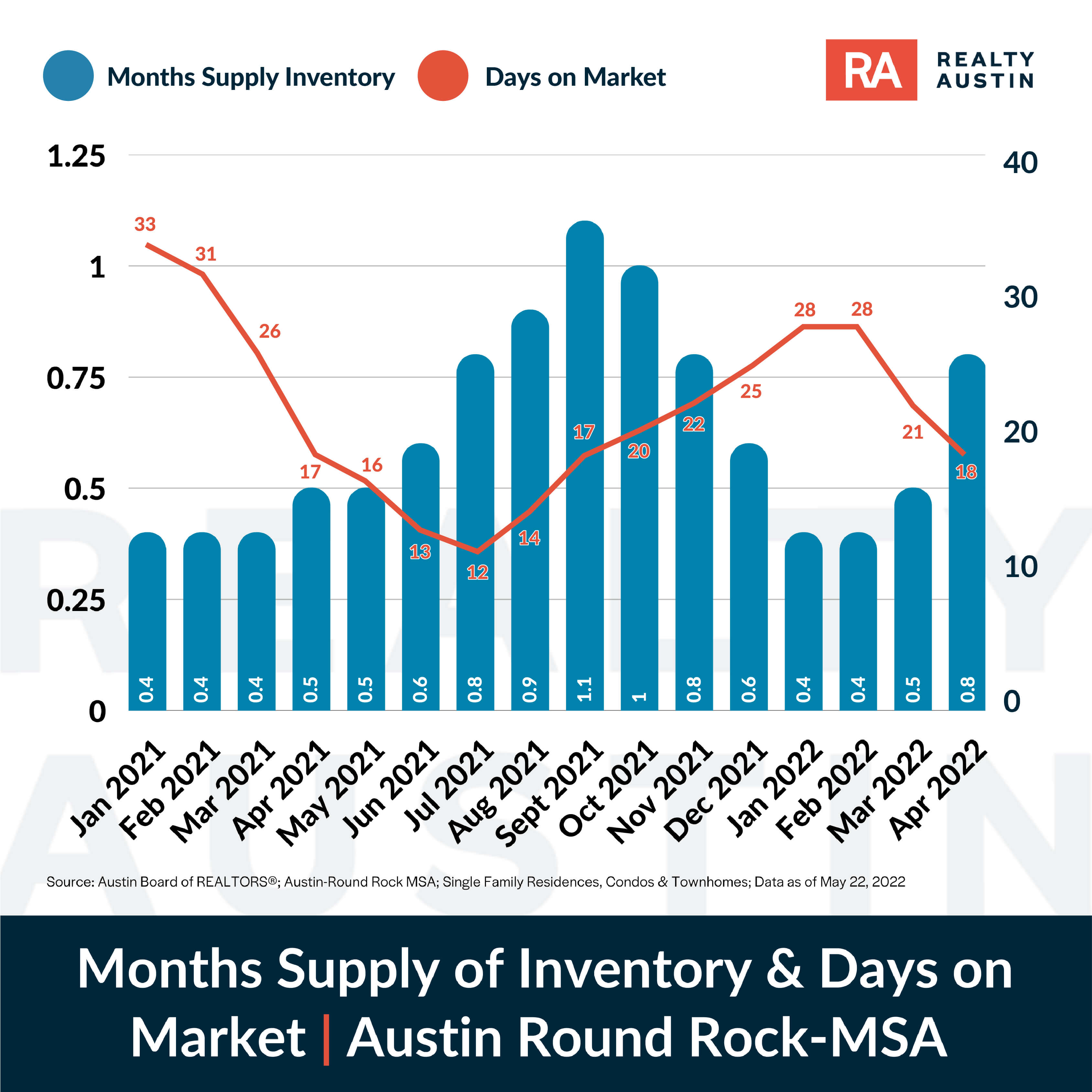
In Austin, homes are still selling fast and the days on market year-to-year are not yet increasing as inventory rises.
Should I wait for interest rates to lower?
As mortgage rates rise, the cost of waiting goes up — for those that can bear the current rates, this is a good year to buy.
An important thing to keep in mind is that the interest rates we got used to were artificially low. According to Investopedia, the Federal Reserve cut interest rates as a response to the pandemic and the struggling economy. This impacts mortgage rates as well, and it helps to give context about where those rates have been previously.
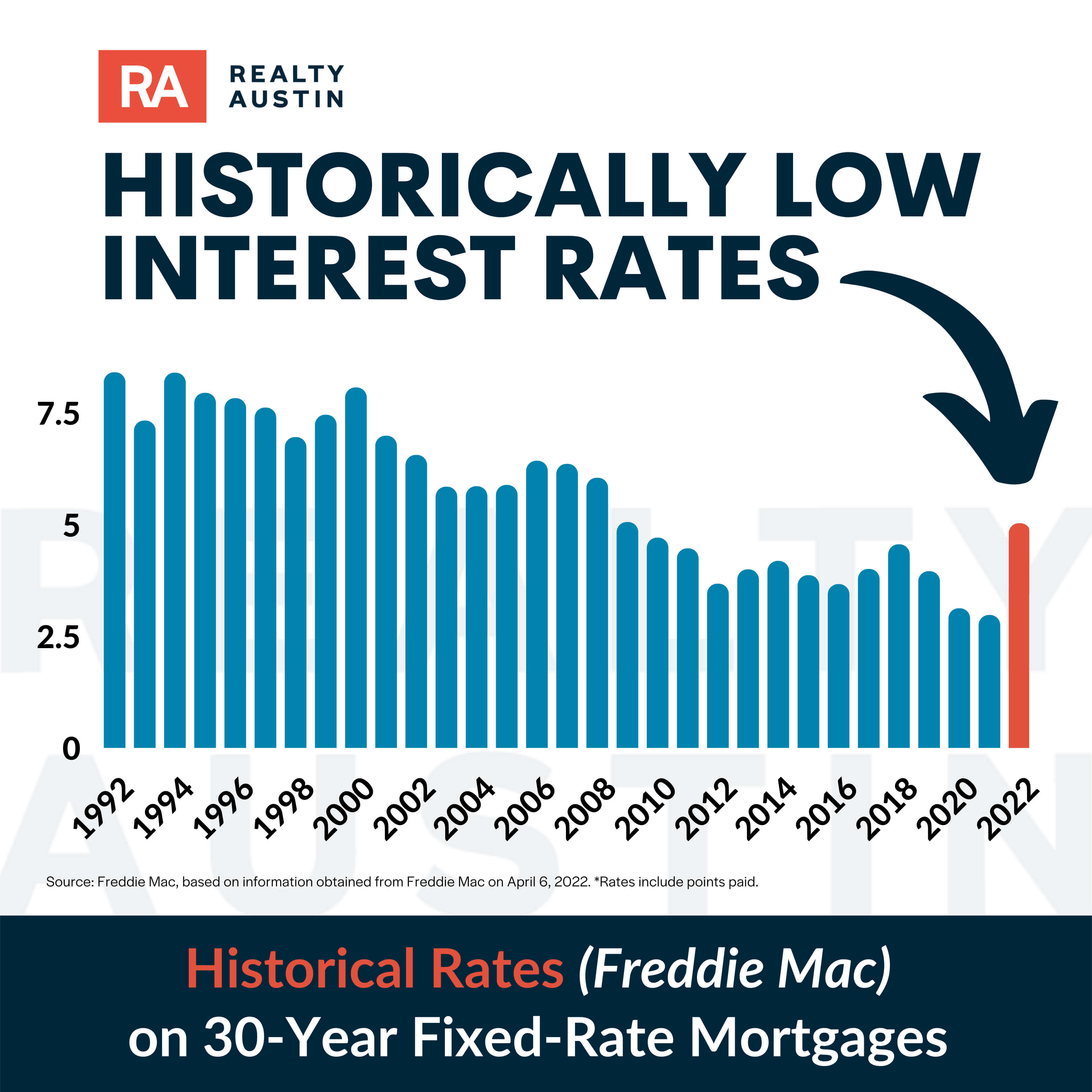
Historically, interest rates are still low. This chart shows interest rates since 1992 on 30-Year Fixed-Rate Mortgages for a loan at $575,000. Based on information obtained from Freddie Mac on April 6, 2022.
According to Freddie Mac, the monthly average rate on 30-year-fixed-rate mortgages was 4.98% in April 2022, but it was 6.18% in April 2007 and 8.14% in April 1997. While we can’t predict what will happen, according to CNBC, interest rates are expected to continue to fluctuate in 2022.
Rising mortgage rates are unlikely to have a dramatic cooling effect on Austin’s hot market. According to a quote given to The Austin-American Statesman, Independence Title's Mark Sprague said that we should expect, "Maybe a tad slowdown, but not much. Rates increasing will slow sales, but not stop them. The market still needs shelter."
What is happening with home prices?
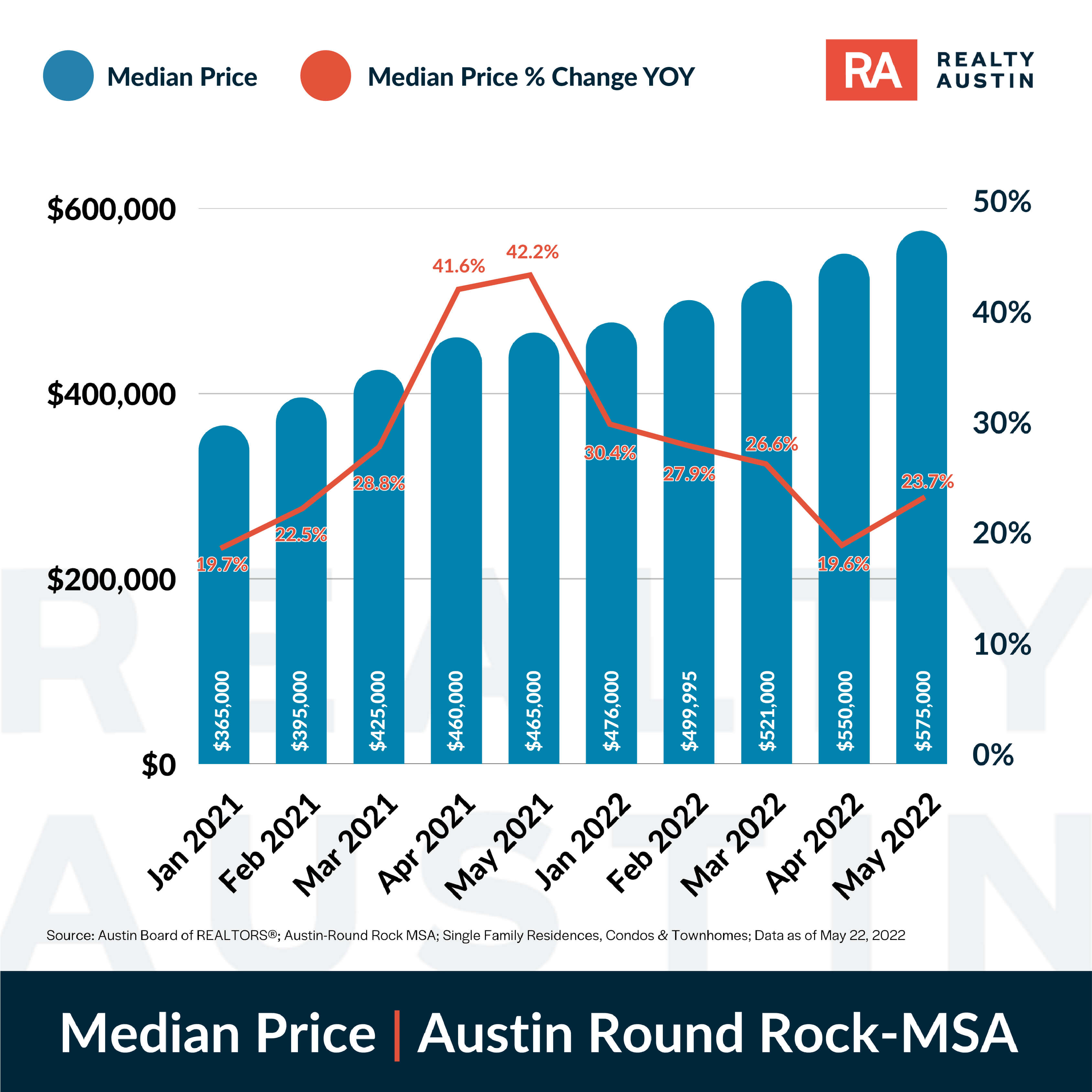
Home prices continue to rise in Austin, and they are expected to continue to do so, just at a slower rate.
Home prices continue to set record-breaking levels in Austin, making it a great time to be a homeowner. From April 2020 to April 2021 home prices appreciated 41%, whereas homes appreciated 19% from April 2021 to April 2022. On a month-over-month basis, the median price has risen 4.5% from April 2022 to mid-May 2022. Prices will continue to rise, but the days of rapid home price growth are slowing down.
According to CoreLogic, U.S. home price annual gains are projected to slow to around 6% nationally by March 2023. If you’re looking to sell at the top of the market, the data suggests we are at that tipping point where we will not continue to see the dramatic increase in home prices that we saw in the last two years.
In April and into mid-May, we have also been seeing an increasing number of price reductions week-over-week in the MLS.
We’re seeing more price reductions
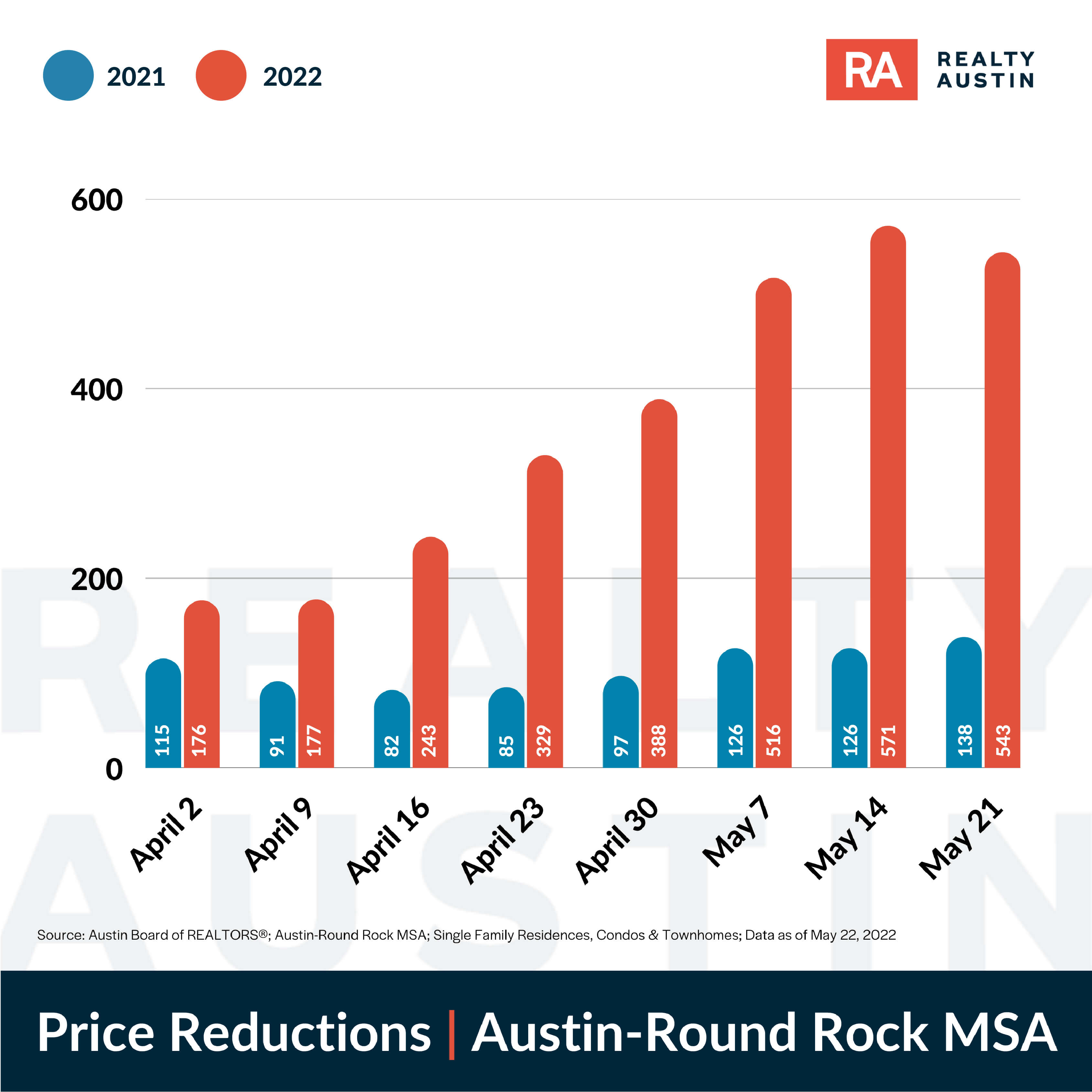
Price reductions occur when a seller lowers the listing price of their home after going on the market, which is a leading indicator that our local market is cooling.
When both home prices and mortgage rates rise simultaneously, buyers' monthly interest and principal payments are also greatly increased. This makes it much harder for homebuyers to afford the homes they have been searching for and will hold down the rise in home prices.
For buyers, this means you have better odds of winning an offer on a home closer to the asking price rather than the dramatic over-asking prices we have been seeing over the past year. Price and rate increases mean fewer eligible buyers, and as a result, we won’t see people lining up to bid on homes the way they did a few months ago. That doesn’t mean you can lowball sellers, though — homes are still selling quickly, and on average for more than the original price at this time.
If I buy right now, is the value of my home going to drop?
A recent Washington Post article quoted Lawrence Yun, chief economist of the National Association of Realtors as saying “Price growth will steadily decelerate where year-over-year annual home price gains will look quite normal at five percent by the end of the year. If you’re thinking long-term and buying a home to have a stake in our economy and be an owner, the value of your equity will likely grow gradually even if home prices rise only modestly over the years.
According to a recent Fortune article, Bank of America has a very “bullish” 2022 outlook. The climbing mortgage rates could potentially cool the housing market in the long term, but Bank of America says the rate increases could fuel buyers to lock in rates in the short term. “Rising household incomes, favorable demographics, and ‘shifting preferences due to remote work’ should also put upward pressure on price growth,” according to Bank of America, and “that demand is something the supply side of the market—which is still hovering around four-decade lows for housing inventory—simply can't handle.”
Depending on the area, the rate at which we see appreciation slowing will vary. We are keeping a close watch on our local markets and our team of local industry experts is very dialed-in with pricing and appreciation for the areas they serve.
What if I just keep renting?
According to KXAN, Austin ranks second amongst all other major American cities in terms of the rate at which rent is increasing. The report shows that the cost of renting went up 38% between March 2021 and March 2022, and it shows no signs of slowing.
Additionally, landlords may have to raise rent to reflect the increased property assessment, as reported by KXAN.
If you have the ability to buy, you may want to consider acting in order to get in the game and begin building equity. Bloomberg reports that experts consider owning a home a good hedge against inflation, and housing is an asset that tends to increase in value. Additionally, your mortgage is a way to protect yourself from rising rents and it can help stabilize your monthly housing costs.
What we’re watching moving forward:
- Continued increase of housing inventory
- Pending sales trends
- Declining sales to list price ratio
- Home price appreciation
- New construction listings and builder confidence
- Price reductions and Days on Market (DOM)
- Expert projections
In a shifting real estate market, the guidance and expertise that real estate agents provide has never been more valuable. As Central Texas’ #1 independent real estate brokerage, we are constantly studying how the local market is trending to help our clients make informed decisions, build their wealth and prosper in the future.
Enjoy this blog post? Click here to subscribe for updates
Leave A Comment